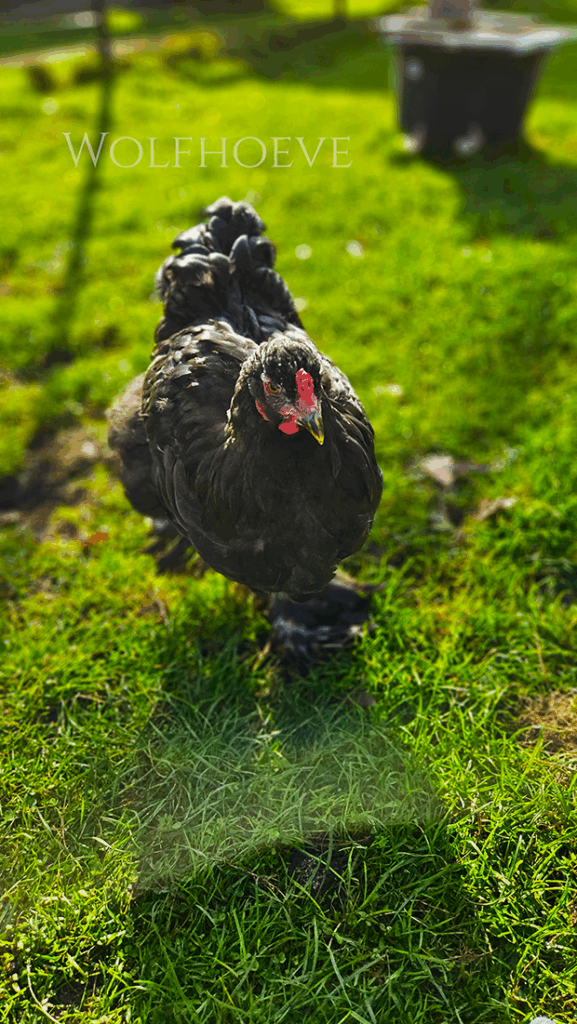
Solid Black & Blue Brahmas

blackrun

Black Brahmas

Deep, even black with beetle-green sheen

What is Black?

Black is one of the most fundamental Brahma varieties. Birds should show solid black plumage with a rich beetle-green sheen under sunlight, free from any red, bronze, or purple tones. Well-bred Black Brahmas are not only striking on their own, but also form the genetic foundation for many project colours such as Blue, Mottled, Laced, and Pyle.

Genetic Basis

  • Base – Extended black (E) background, reinforced by melanising genes.
  • Goal – Full, even black coverage from head to tail with metallic green sheen,
    clean yellow legs, and correct Brahma type.

Appearance

Plumage should be uniform black, shining with a metallic green gloss.
Any leakage of brown or bronze in hackles, saddles, or wings is selected against. Foot feathering must be full and balanced, keeping the classic Brahma silhouette.

Breeding Notes

  • Select the glossiest, green-sheen birds to strengthen colour depth and lustre.
  • Avoid introducing pattern genes unless working within a dedicated project line.
  • Black is indispensable in Blue projects as the bl/bl parent,
    ensuring predictable ratios of Blue, Black, and Splash offspring.

How Black Works in Projects

  • Blue programme – the anchor colour, always required for stable ratios.
  • Mottled projects – adding mo/mo produces Black Mottled.
  • Laced and Pyle – used as a clean base before introducing pattern
    (e.g. Pg, Ml) or white dilution genes (Di, I).
At Wolfhoeve, we maintain a strong Black line to anchor Blue, Mottled, and Laced projects. This ensures both genetic stability and the brilliance of the green-sheen black that makes
the variety so iconic.

Blue

Blue is the single-dose form of the Blue dilution gene (Bl/bl). It turns black pigment into an even slate while keeping the underlying dark character that gives depth and contrast. Use Blue as a working colour in your programme to bridge Black and Splash lines without restating ratios here – see the flowchart below for outcomes.

Appearance

Uniform slate across body and tail with naturally darker edging on many feathers. Mature cocks can show slightly deeper hackles and saddles while still reading as Blue overall. Maintain full foot feathering and strong Brahma type.

Selection & breeding notes

  • Keep tone consistent from shoulder to thigh – avoid birds that break into patchy charcoal and pale panels.
  • Choose crisp edging rather than blurry transitions to preserve definition in future laced projects.
  • Pair Blues from lines anchored by glossy Blacks to prevent the slate from drifting muddy or brownish.
  • Rotate Blue with both Black and Splash to refresh depth and keep outcomes predictable (see flowchart).

Interactions in projects

  • Lacing & pencilling – Blue softens black outlines to slate; start from clean, sharp stock to keep rings readable.
  • Mottling – white tips remain; the subterminal band shifts from black to slate for a softer, porcelain-like look.
  • Dominant White – partial inhibition over Blue can produce very pale areas; use sparingly to avoid washing out contrast.

Wolfhoeve selects Blue Brahmas for even slate colour, size, foot feathering, calm temperament, and utility as a bridge between Black and Splash within the breeding programme.

What About Blue and Splash Pyle?

In some breeds, such as Old English Game, Blue Pyle (Red Pyle + Blue, Bl/bl⁺) and Splash Pyle (Red Pyle + Splash, Bl/Bl) are officially listed varieties. Among Brahma hobby breeders, the terms appear online, but usually as shorthand to describe birds with a very pale, Pyle-like appearance. They are not formally maintained colour lines in Brahmas, and none are recognised under European standards.

How Black, Blue and Splash Relate

Black – E, bl/bl
Blue – E, Bl/bl
Splash – E, Bl/Bl

Black × Black

Parents: E, bl/bl × E, bl/bl

offspring
  • 100% Black (E, bl/bl)

Black × Blue

Parents: E, bl/bl × E, Bl/bl

offspring
  • 50% Black (E, bl/bl)
  • 50% Blue (E, Bl/bl)

Blue × Blue

Parents: E, Bl/bl × E, Bl/bl

offspring
  • 25% Black (E, bl/bl)
  • 50% Blue (E, Bl/bl)
  • 25% Splash (E, Bl/Bl)

Black × Splash

Parents: E, bl/bl × E, Bl/Bl

offspring
  • 100% Blue (E, Bl/bl)

Blue × Splash

Parents: E, Bl/bl × E, Bl/Bl

offspring
  • 50% Blue (E, Bl/bl)
  • 50% Splash (E, Bl/Bl)

Splash × Splash

Parents: E, Bl/Bl × E, Bl/Bl

offspring
  • 100% Splash (E, Bl/Bl)

Notes: E = extended black base. Bl = Blue dilution allele. bl = wild-type (non-blue) allele. Keep a strong Black line for sheen and depth, and use Splash strategically to generate reliable Blue.