Salmon Brahmas
What is Salmon?
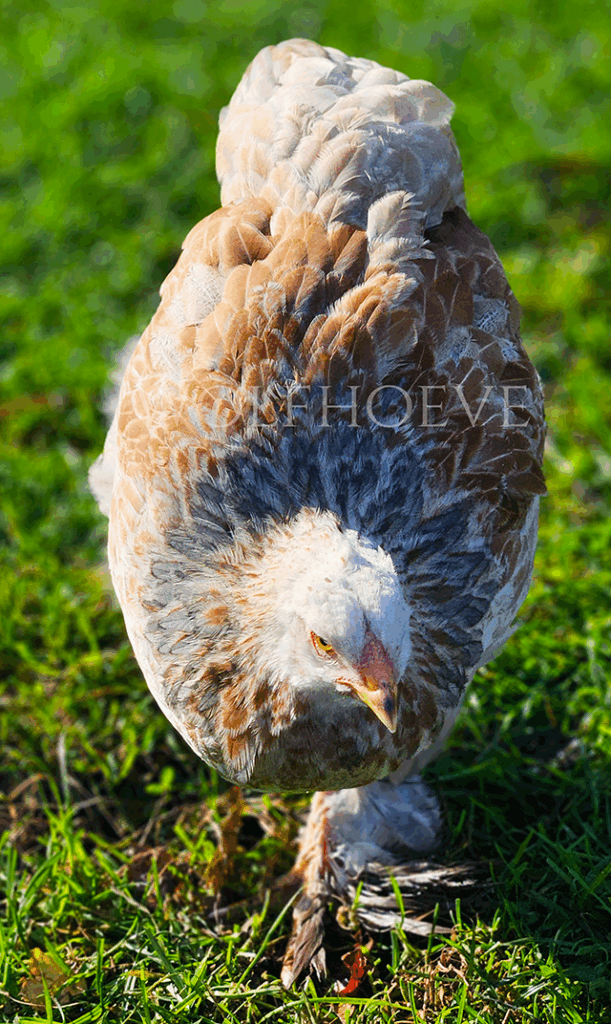
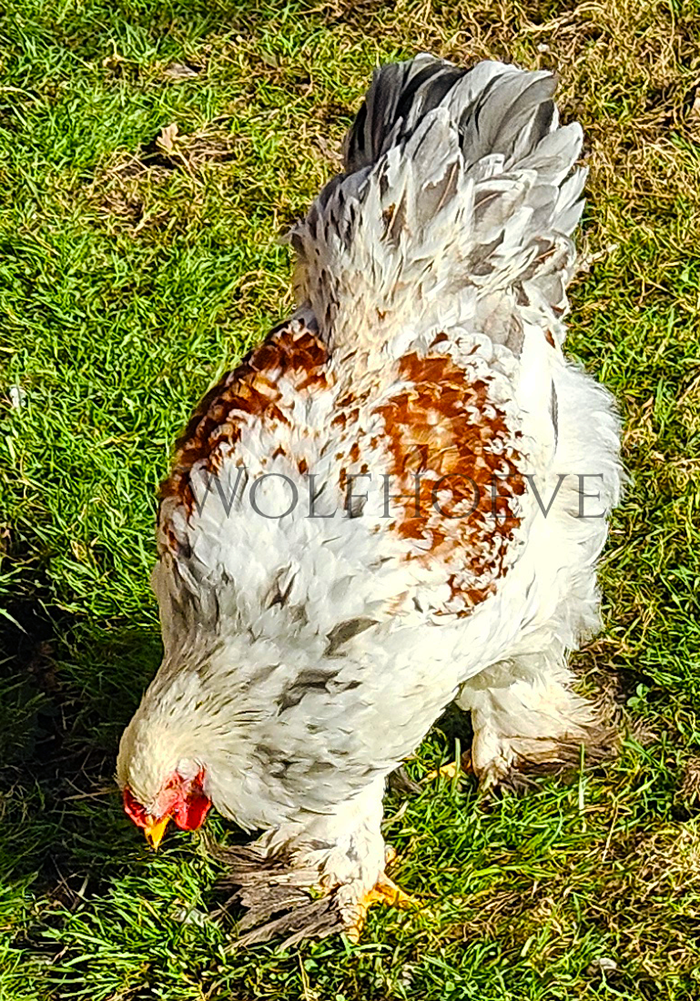
The Salmon Brahma shows a soft salmon-pink to reddish buff body colour, with clear contrast from the darker hackles and tail. The colour expression is based on the wheaten background (eWh), which restricts black pigment on the body while concentrating darker colour in specific areas such as the hackles and tail.
Genetics of Salmon
- Base: Wheaten (
eWh). - Ground colour: red/gold, producing the warm salmon appearance.
Many Salmon lines also carry Mahogany (Mh). This gene deepens the red tone, shifting Salmon from pale peach to a more chestnut or rusty hue. This explains why Salmon can vary noticeably between breeders.
Blue Salmon
Adding the Blue gene (Bl) dilutes black pigment in the hackles and tail:
- Salmon (
bl/bl) – black hackles and tail with a warm salmon body colour. - Blue Salmon (
Bl/bl) – slate blue hackles and tail, with softer contrast. - Splash Salmon (
Bl/Bl) – very pale or patchy hackles and tail, with a creamy salmon body colour.
These variants segregate naturally when Blue Salmon are bred together, following the same ratios as other blue-based varieties.
- Salmon × Salmon breeds true, though colour depth varies depending on
Mh. - Blue Salmon × Blue Salmon produces a mix of Salmon, Blue Salmon, and Splash Salmon (25–50–25%).
- Introducing Mahogany (
Mh) deepens and enriches Salmon, while lines withoutMhremain lighter and more peach-toned. - Consistent selection is required to maintain feather quality and colour saturation, as Salmon can quickly appear washed out if poorly bred.
Color Overview
The ideal Salmon Brahma shows a warm, even salmon ground colour on the body, with clear contrast between the body and the darker areas of the plumage. The overall impression should be rich, soft, and harmonious – never muddy, patchy, or washed out.
Body colour (hens)
- The body should be a uniform salmon tone, ranging from warm peach-salmon to deeper reddish salmon.
- Colour must be even across breast, sides, and back, without patchiness, banding, or “dirty” shading.
- No black leakage is acceptable on the breast, flanks, or lower body.
- Excessive paleness (cream, buff-white) or overly dark, rusty brown tones are faults.
- The salmon should read as warm and soft – not grey, dull, chalky, or lifeless.
Hackles (neck feathers)
- Hackles should be clearly darker than the body, providing strong but balanced contrast.
- Colour is typically black or very dark slate (in Blue Salmon), often with a subtle warm edging.
- The transition from body colour to hackles should be clean and defined, not blurred or smeared.
- Hackles must not bleed salmon colour deep into the dark area, and black should not spill down into the breast.
Tail
- The tail should be solid black in Salmon, or slate blue in Blue Salmon.
- Feathers should be clean, uniform, and well defined.
- Rusting, brown leakage, sootiness, or uneven dilution in the tail is undesirable.
- In Splash Salmon, the tail is very light but should still read as a diluted dark area, not pure white.
Wing structure
- Wing bows and wing coverts should harmonise with the body colour.
- Primaries and secondaries may be darker, but should not dominate the overall appearance.
- Excessive black in the wings disrupts the wheaten balance and is a fault.
Ground colour quality
- The salmon ground colour should have depth and saturation (often strengthened in breeding by red enhancers such as Mahonie /
Mh). - Too little depth gives a pale, insipid look.
- Too much red enhancement can push the colour into overly red, chestnut, or rusty tones, losing the classic salmon softness.
- The best birds sit in the middle – warm, rich, and glowing without heaviness.
Overall balance
Salmon is defined by contrast with restraint. The body must stay clean and warm, while the dark areas remain confined and purposeful. Colour should enhance the bird’s type, not overpower it. The ideal Salmon Brahma looks refined, warm, and distinctly salmon – immediately recognisable without harsh contrasts or colour noise.