White Brahmas
Dominant White vs Recessive White – what they are, how they differ, and how to breed them
What does “white” mean in Brahmas?
Several genetic routes can produce a white-looking Brahma. The two most important are Dominant White and Recessive White. They are different genes that behave differently in crosses and interact with other colours in different ways.
White Brahmas have been bred for well over a century, though their status in poultry shows depends on the country. In the Netherlands, Wit is listed as a recognised variety by Brahma Club Nederland, and in Germany the BDRG registry includes “Weiß” and White-Columbian forms. The Poultry Club of Great Britain also accepts White Brahmas, while in the United States the American Poultry Association recognises only Light, Dark, and Buff, leaving White without its own class. Most exhibition Whites in Europe descend from recessive white lines, which mask both black and red pigment to produce a solid white bird. Breeders also use dominant white in projects such as Pyle or Porcelain: this gene erases black from the wings and tail while allowing warm red or lemon body colour to shine through, creating striking contrasts. Together, these two routes to “white” give Brahma breeders both a traditional show variety and a powerful tool for developing new patterns.
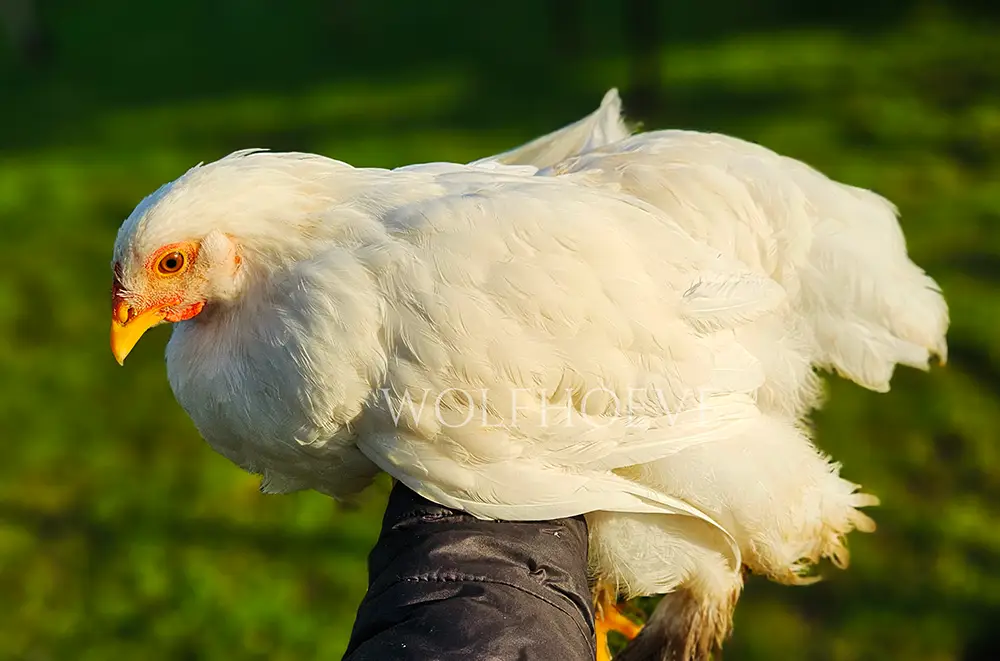
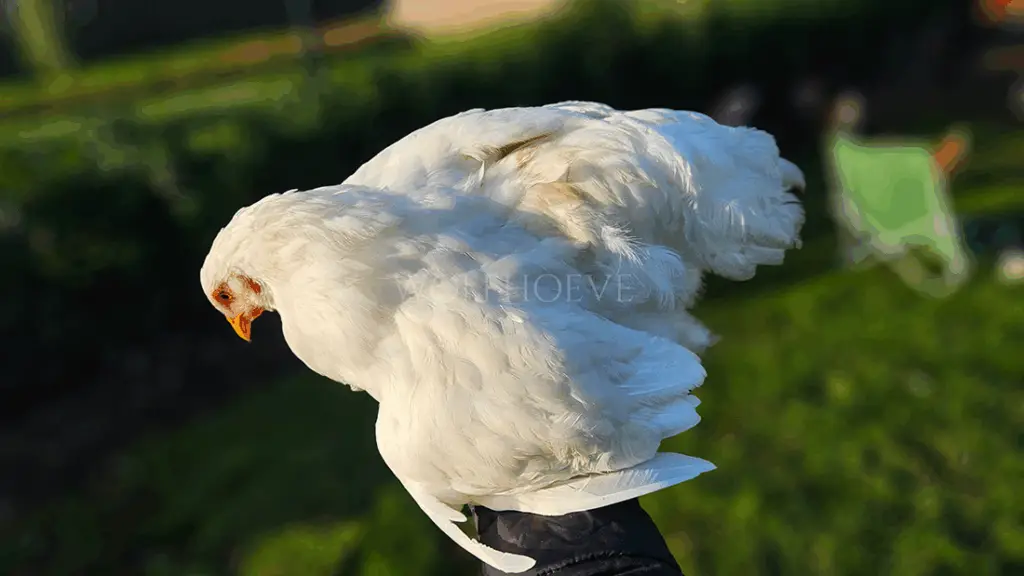
Dominant White (I)
Incompletely dominant - edits black, leaves red or gold. Not sex linked.
- Symbol - I (incompletely dominant).
- Action - inhibits black pigment strongly, red - gold largely remains.
- Phenotype - may show dark flecks in hackles - wings - tail, especially I/i⁺. Body can stay red or lemon in projects.
- Homozygous vs heterozygous - I/I cleaner than I/i⁺, minor speckling still possible.
- Pyle example - red - lemon body with white wings - tail; I removes black from flights - tail while warm body colour remains.
- Base - E, e+, etc.
- Restrictors - Co, Pg, Ml.
- Modifiers - Bl, Di, Mh, mo.
- White - I/i⁺ or I/I.
- Co + I → white wings - tail with warm body (Pyle-type).
- Bl + I → any leaks look pale - bluish.
- mo + I → mottling band weakened; pale tips remain.
- I/I usually cleaner than I/i⁺, but flecks can occur.
- I/i⁺ × i⁺/i⁺ → ≈ 50 percent show Dominant White.
- I/i⁺ × I/i⁺ → 25 percent I/I, 50 percent I/i⁺, 25 percent normal.
- I/I × i⁺/i⁺ → ≈ 100 percent show Dominant White.
Recessive White (c/c)
Recessive - masks both black and red. Phenotype is white regardless.
- Symbol - c (recessive). White shows only as c/c.
- Action - masks black and red across the plumage → solid white bird.
- Phenotype - fully white with no intentional coloured areas. Underlying variety is hidden.
- Carriers - C/c look non-white but pass the allele.
- Because c/c hides everything, lines can carry unexpected colours. Plan test matings if you want to reveal or combine later.
- Base - any (E, e+, etc.).
- Patterns - Co, Pg, Ml.
- Modifiers - Bl, Di, Mh, mo.
- White - c/c.
- Always looks white, whatever the base - pattern.
- Underlying variety remains hidden.
- Useful for true white lines or holding mixed bases while improving type.
- c/c × c/c → 100 percent white.
- c/c × C/c → 50 percent white, 50 percent carriers.
- C/c × C/c → 25 percent white, 50 percent carriers, 25 percent non-carriers.
Interactions and common confusions
- Blue gene (Bl) – with Dominant White, any remaining black may look pale or bluish on leaks. With Recessive White, Blue is hidden entirely when
c/c. - Columbian restriction (Co) – combines elegantly with Dominant White to create white wings and tail while letting warm body tones show, as in Pyle projects.
- Mottling (mo) – Recessive White masks mottling. Dominant White can obscure the black band in Mille Fleur or Porcelain, often leaving only pale tips visible.
- Splash vs White – Splash is
Bl/Bland affects only black areas, giving pale patches where black would be. White genes are not the same as Splash.
How to tell which white you have
- Look for coloured areas – red or lemon body with white wings and tail strongly suggests Dominant White in a patterned project.
- Check for dark speckling – tiny black flecks in hackles or tail are common with Dominant White, rare with clean Recessive White.
- Do a test cross – mate the white bird to a solid black. If all or about half the offspring show white effects, it is likely Dominant White. If none are white but all look normal, then later produce 25% white when siblings are crossed, it is Recessive White carried.