What is Porcelain?
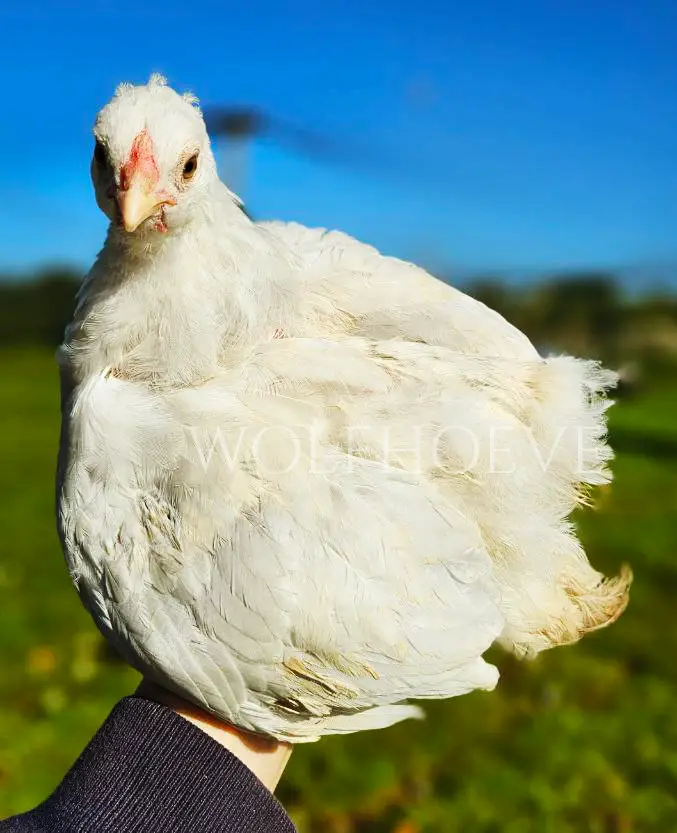
Porcelain Brahma is the pastel counterpart to Mille Fleur, created by combining the recessive mottling gene (mo/mo) with the recessive lavender gene (lav/lav) on a gold base. Like Mille Fleur, it also relies on pattern modifiers (Pg, Ml, Co, Db) to position the spangles correctly on each feather. Lavender dilutes both the ground and the spangles, softening the colour palette into a powdery blend of cream, lavender-grey, and white.
Each feather shows three distinct zones: a cream feather base (lavender diluting buff/red), a lavender crescent band (lavender diluting black), and a white mottled tip from mo/mo. The result is a pastel, powder-like Mille Fleur with a gentle, desaturated look.
Clean mottling, even lavender expression, and balanced tip placement are essential for quality Porcelain birds. While blue or splash modifiers sometimes appear in hobby projects, the defining feature of true Porcelain is Lavender on the Mille Fleur framework.
Why is Porcelain rare in Brahmas?
Porcelain is common in bantam breeds like Pekins and d’Uccles, but not in Brahmas. The lavender gene (lav/lav) needed for Porcelain was never part of the historic Brahma varieties admitted into standards, which focused on Light, Dark, Buff, Columbian, and Partridge lines. Breeding Porcelain also requires stacking several recessives (mottling + lavender + patterning), which is harder to stabilise in a large, slow-maturing breed like the Brahma compared to smaller bantams.