At Wolfhoeve, we’re working toward rare and refined Brahma lines—especially in complex feather patterns like Porcelain, Blue Porcelain, and Red Porcelain. These birds have a unique, layered look: warm base colours, dark feather centers, and soft white tips. But what creates this distinctive appearance?
Two things:
- The mottled gene (mo), and
- The mille fleur pattern (a combination of patterning genes)
The mo Gene – The White Tip Maker
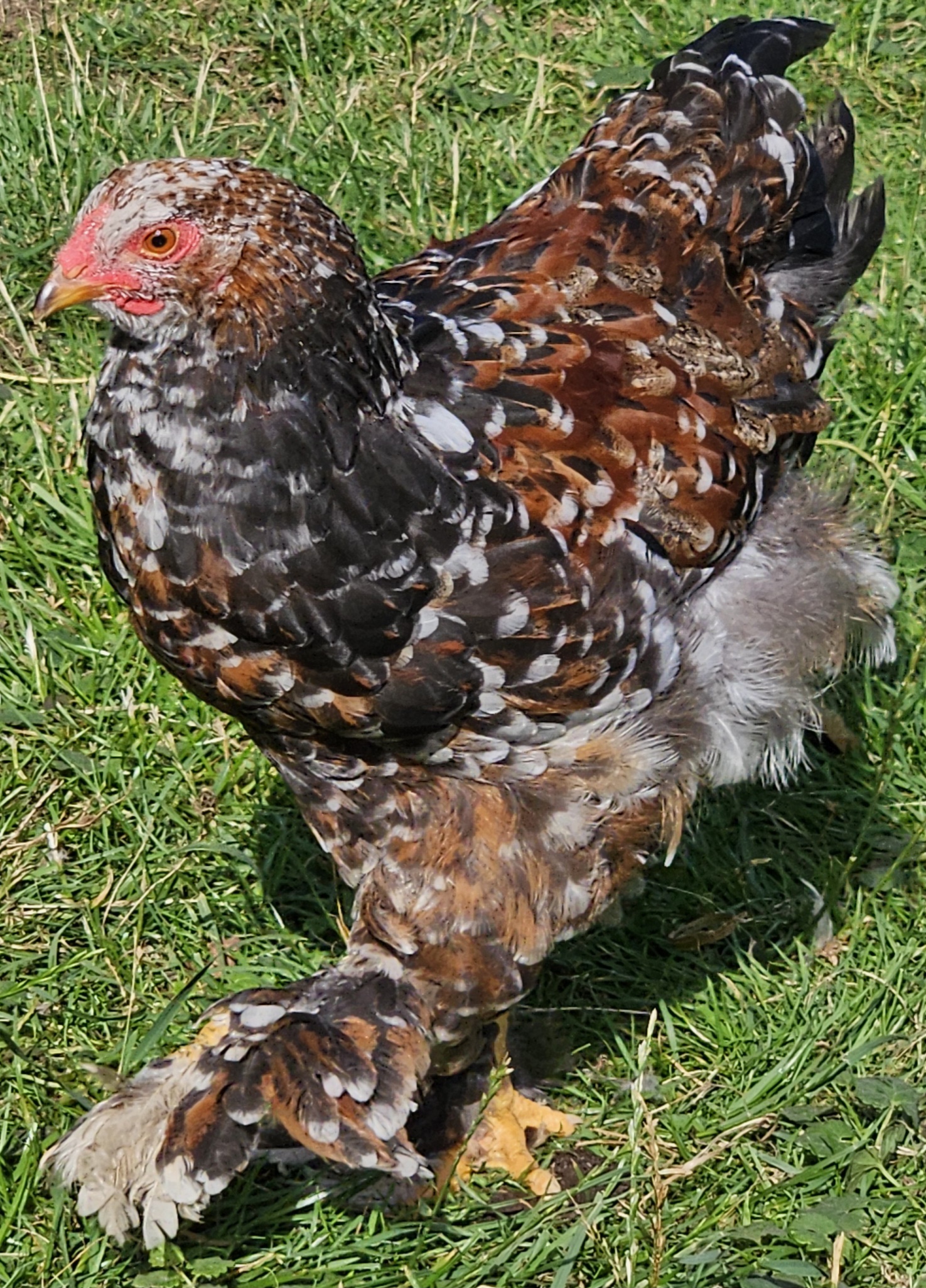
The mo gene is a recessive mutation that causes pigment to stop entering the feather tip during early growth. This temporary halt creates a distinct white feather tip, followed by a black pigment band (if black is present), then the feather’s base colour.
Scientifically, this is known as a “colour stop mutation”. It’s independent of total melanin production (so the birds don’t “grey” with age). The mutation affects the EDNRB2 gene, specifically Arg332His. It disrupts pigment cell migration and differentiation in the feather pulp during development.
Feathers grow from the base outward. Pigment is laid down in a timed sequence: first black, then red/yellow. When mo/mo delays pigment from reaching the keratinized tip, the result is a clear white spangle at the end of the feather.
This explains the distinctive “tri-colour” pattern in mottled feathers:
base colour → dark band → white tip.
Why Mottling Varies
While mo/mo is required for mottling, the expression of white tips can vary between birds—and even between moults. This depends on:
- Speed of feather growth: faster-growing feathers often show stronger white tips.
- Vitality and age: pigment delivery slows in older birds or those with weaker cell regeneration, delaying black pigment even more.
- Line selection: In Dutch Brahma lines, “silent” or minimal mottling is sometimes preferred, while German lines may display bold, full mottling from the same genotype.
This means two birds of the same age and mo/mo genotype can show very different phenotypes depending on feather growth rate and genetic background.
What Is “Porcelain” in Brahmas?
In European Brahma breeding, “Porcelain” refers to a combination of:
- A gold or red base (s+)
- Patterning genes (explained below)
- The mo/mo genotype, for white tips
- Optionally, lavender (lav/lav) to dilute black pigment to soft grey
Despite some online confusion, lavender is not required to call a Brahma “Porcelain” in Europe. At Wolfhoeve, we work with both:
| Type | Genotype Basics | Lavender Present? | Appearance |
|---|---|---|---|
| Red Porcelain | s+ base + Db Pg Ml + mo/mo | No | Warm red-gold, black band, white tip |
| Lavender Porcelain | s+ base + Db Pg Ml + mo/mo + lav/lav | Yes | Soft beige or grey, muted contrast |
Mille Fleur: The Pattern Behind the Porcelain
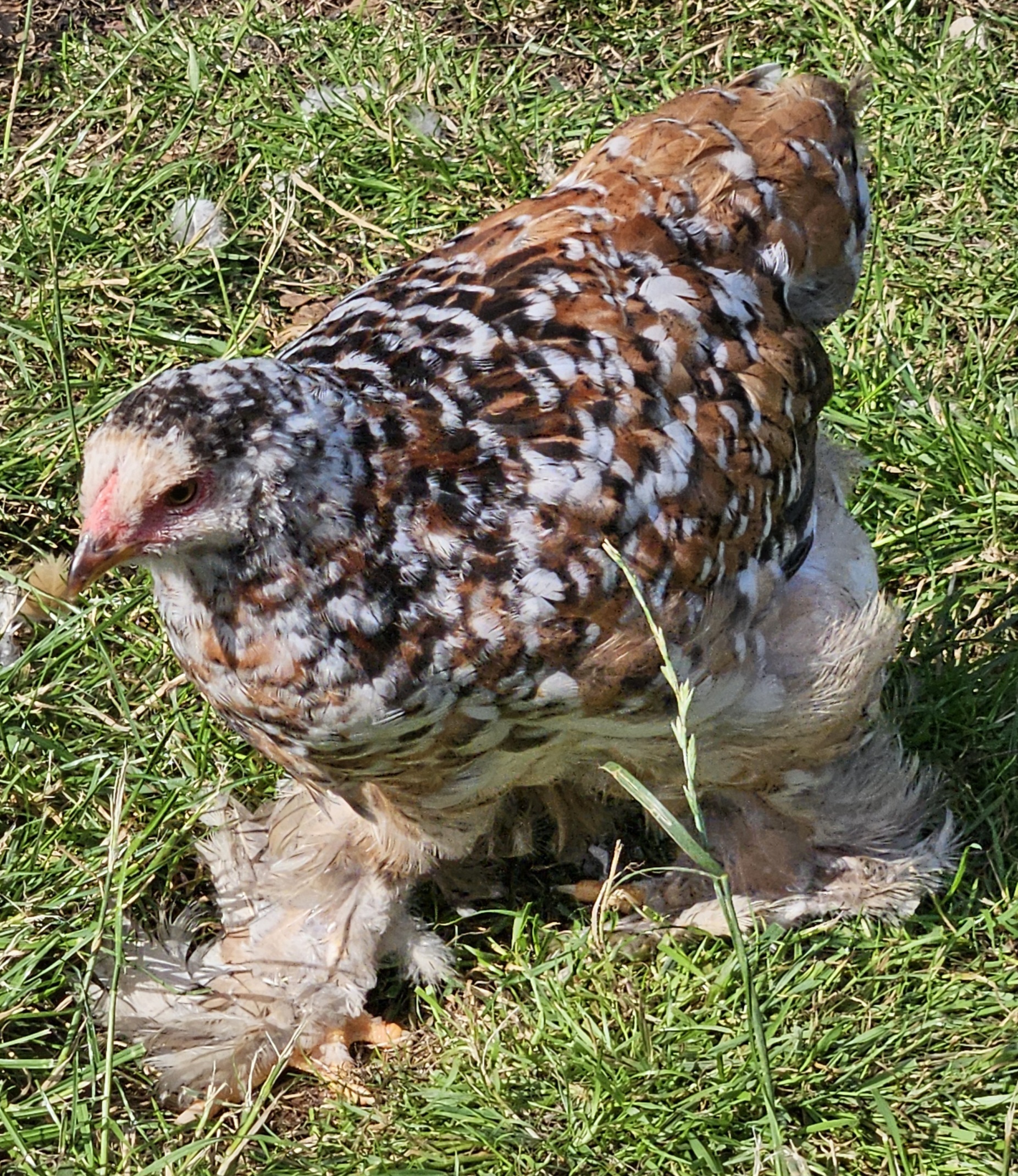
The mille fleur pattern gives feathers their layered, teardrop look with dark centers. It is created by three main genes:
- Pg – pencilling pattern
- Ml – melanotic, increases black pigment concentration
- Db – dark brown, modifies contrast and layout
When combined with a buff or red base and mo/mo, mille fleur becomes porcelain. Adding lav/lav dilutes the black to grey, softening contrast but keeping the same structure.
Putting It All Together
To breed a Red Porcelain Brahma:
- Start with a gold or red base (s+)
- Include pattern genes: Db, Pg, Ml
- Ensure mo/mo for white tips
- No lavender needed
For Lavender or Blue Porcelain Brahmas, add either:
- lav/lav – turns black to pale grey
- Bl – turns black to blue
Our Work at Wolfhoeve
We are currently developing and refining several porcelain-related colour lines in Brahmas:
- Red Porcelain
- Buff Porcelain Columbian
- Blue and Lavender Porcelain
We select for pattern clarity, clean spangling, strong feather structure, and consistent mo expression. Our aim is to produce birds that meet visual expectations—and reliably pass on their traits to future generations.
What’s Next: The Mille Fleur Pattern in Focus
This post focused on the role of mo and the basics of porcelain feathering. In our next article, we’ll explore the mille fleur pattern in depth—how it works, how to recognize good expression, and how